Fake News – How Russian Disinformation Challenges Our Democracy
We are very pleased to invite you to the event “Fake News – How Russian Disinformation Challenges Our Democracy.” The event will take place on Thursday, May 21, 2026, at 5:30 p.m. at the Schwarzkopf Foundation Young Europe.
-
Time
-
LocationSchwarzkopf Foundation Young Europe, Sophienstraße 28/29, 10178 Berlin
-
Guests
Cloned news websites, fabricated articles, and bot networks: Russian disinformation is no longer an abstract phenomenon. As part of the so-called “Doppelgänger campaign,” for example, deceptively realistic copies of Spiegel, Süddeutsche Zeitung, and Bild were published online, filled with pro-Russian narratives. These included claims that the German government was neglecting its own population in favor of Ukraine, while at the same time calling for a halt to arms deliveries. According to analyses by the Bavarian State Office for the Protection of the Constitution, more than 750,000 people in Germany were exposed to such content over an eight-month period.
Examples like this show how professionally and strategically disinformation is deployed today. Its aim is not only to spread individual falsehoods, but to systematically undermine trust in media, institutions, and democratic processes. Russian disinformation thus poses a serious challenge to liberal democracy in Europe. In response to this threat, the EU has launched the European Democracy Shield—an initiative designed to counter disinformation and foreign influence, including measures such as establishing a European fact-checking network and strengthening cooperation within civil society. But is this enough?
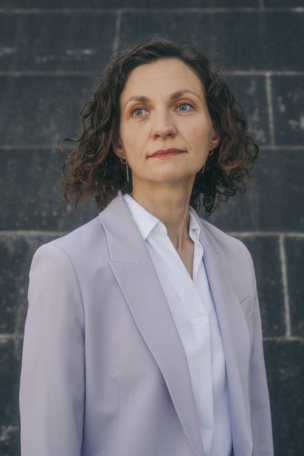
We are very pleased to welcome Julia Smirnova, Senior Researcher at CeMAS and expert on digital authoritarianism and Russian influence campaigns, on Thursday, May 21, 2026, at 5:30 p.m. at the Schwarzkopf Foundation Young Europe.
Together with you and Julia Smirnova, we would like to discuss the following and other questions: How dangerous is disinformation for democratic cohesion in Germany and Europe? How has the intensity of Russian influence campaigns changed since the attack on Ukraine in 2022? What similarities and differences exist between disinformation strategies used by different states and actors worldwide—such as Russia, China, or even Western contexts? What can Europe learn from this? What are effective measures to counter the spread of disinformation? What concrete impact do initiatives such as the European Democracy Shield have—and where are their limits? Do platforms like X or TikTok take sufficient responsibility? How will disinformation evolve in the coming years due to current developments such as artificial intelligence?
The event is part of the “Young European Security Talks” series. Through this series, we aim to engage young people in discussions on current security policy issues—together with experts and decision-makers.
We would be delighted to have you join us and kindly ask you to register by May 20, 2026.