Politics Without Borders? How Volt Wants to Rethink European Politics
We are delighted to invite you to the event “Politics Without Borders? How Volt Wants to Rethink European Politics.” The event will take place on Monday, 29 June 2026, at 5:30 p.m. at the Schwarzkopf Foundation Young Europe.
-
Time
-
LocationSchwarzkopf Foundation Young Europe, Sophienstraße 28/29, 10178 Berlin
-
Guests
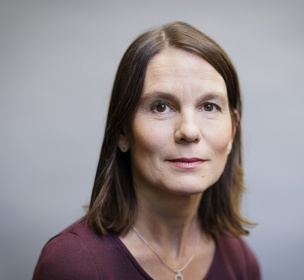
Women are affected in a unique way by armed conflicts, and at the same time, they play a central role in establishing and sustainably securing peace. The UN Security Council highlighted this perspective in 2000 with Resolution 1325, which was adopted unanimously. Women should not be viewed solely as victims of conflict, but as active agents whose participation is crucial for conflict prevention, peace processes, and sustainable peacekeeping. This resolution gave rise to the UN “Women, Peace, and Security” agenda, which to this day provides the framework for the international promotion of women in peace and security processes.
More than 25 years after the resolution’s adoption, however, the question remains as to how this aspiration is being implemented in practice. After all, anyone who speaks of sustainable peace must also ask who is involved in decisions regarding peace and security. Women remain significantly underrepresented in political decision-making processes and peace negotiations worldwide. In 2026, women held 27.4 percent of the seats in national parliaments. In peace and constitutional processes led, co-led, or supported by the United Nations, their share of negotiators and delegates averaged only 18 percent in 2024.The role of women in this context is closely linked to the social and economic conditions necessary for peace. Who can participate in peace processes also depends on who has access to political, economic, and social resources.
The BMZ views feminist development policy as an approach aimed at dismantling existing forms of discrimination and inequality and promoting more equitable social structures. Women, in particular, play an important role as knowledge holders and decision-makers. The goal is to give all people, regardless of gender or background, the opportunity to realize their potential and actively participate in society.
In this context, we are very pleased to welcome Birgit Pickel, Head of the Department for Sustainable Development and Climate at the Federal Ministry for Economic Cooperation and Development (BMZ), on Monday, November 9, 2026, at 5:30 p.m. at the Schwarzkopf Foundation Young Europe.
Together with Birgit Pickel and you, we would like to discuss the following and other questions: What is development cooperation all about? How can development cooperation stabilize conflict-affected regions in the long term and strengthen social participation? What responsibilities does the BMZ assume, and how does its work differ from that of the Federal Foreign Office? How can development cooperation support women’s participation in peace processes? What role do gender equality and women’s participation play in sustainable development and peace? How does feminist development policy translate into practice? What challenges arise when implementing feminist development policy in different social contexts?
We would be delighted to welcome you to the event and kindly ask you to register by 8 November 2026.
Thank you for your registration!