EU Institution Puzzle
Who has the power within the EU? How do EU policies come into being? How can I influence EU decision-making? This puzzle introduces the different EU institutions and visualizes their responsibilities.
We create access to a pluralistic Europe. Our programmes produce publications and educational materials on the topics of migration societies, Europe, democratic citizenship education and youth participation. All materials are available here and can be used for your own purposes.
Who has the power within the EU? How do EU policies come into being? How can I influence EU decision-making? This puzzle introduces the different EU institutions and visualizes their responsibilities.
Here, you find all materials for a workshop discussing the representation of young people in the media. It was developed by Julia Rieger consists of a manual, a presentation and two videos.
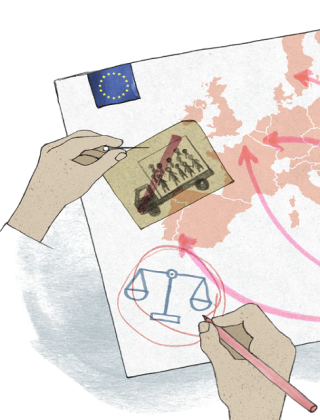
You want to know more about the European history of flight and migration? Our timeline cards visualize and explain the most crucial events and developments.
Here, you can find all materials for a workshop on fake news & hate speech developed by Maja Bogojević and Clara S. Thompson. It examines various challenges and forms of discrimination that arise when dealing with media, and how we can react to them. The material includes a manual and a presentation.
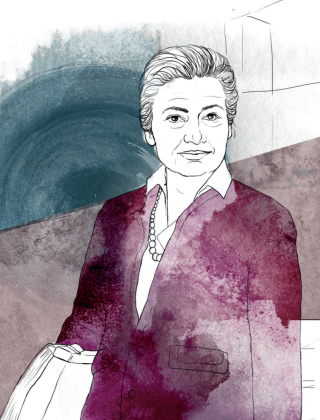
These timeline cards introduce you to important European personalities who are often overlooked despite their inspiring stories.
In 2020, our annual publication takes a look at diversity-sensitive educational processes from different perspectives. Contributors are Prof. Dr. Karim Fereidooni, Prof. Dr. Claudia Lenz (…)
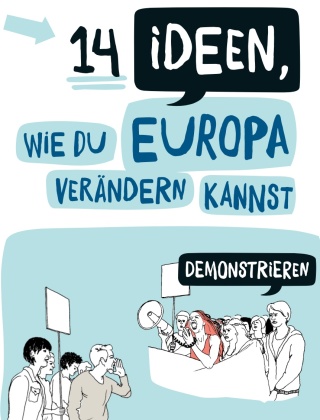
How can I influence European politics? What options do I have to become active and participate? Our poster visualizes ideas on how young people can (…)
The Organizational Package for Participatory Dialogues includes templates for tasks and schedules, a materials checklist, and other tools to help you set up your own participatory dialogue. The package is in German.
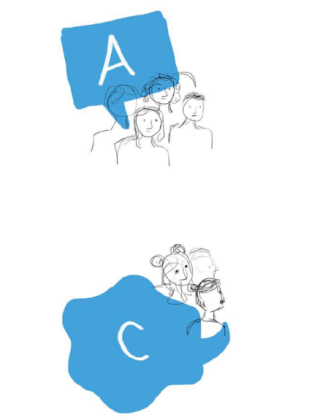
The 4-corner-method allows students to have an open discussion about different and sometimes controversial topics. Here, you find more information about the method and examples for questions and answers.